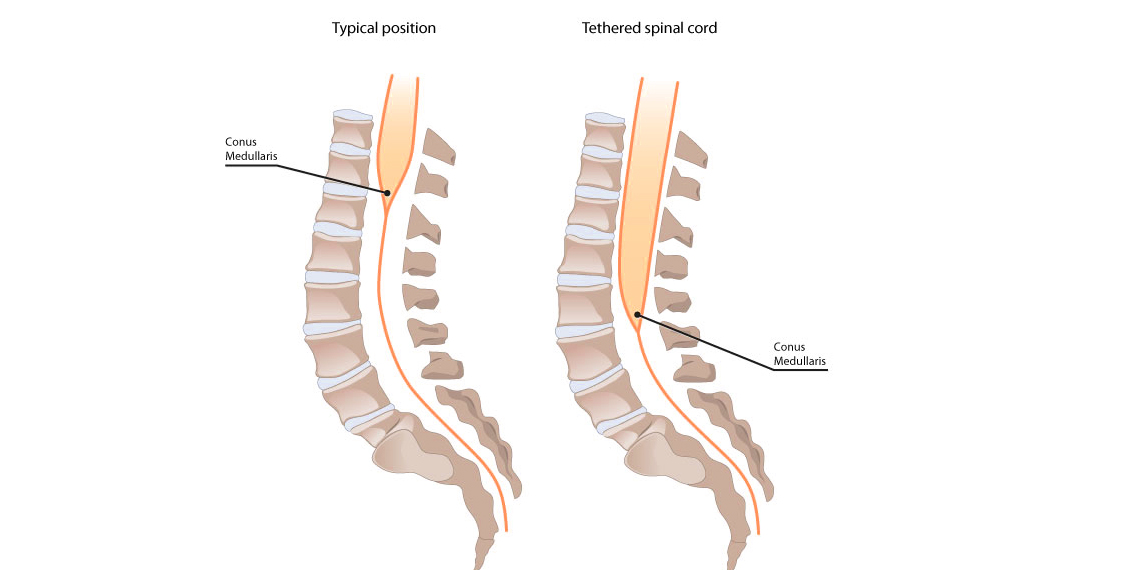
Tethered Cord Syndrome (TCS) is a neurological disorder caused by the spinal cord being abnormally anchored or restricted by a tissue or structural abnormality, limiting its normal movement. Although it is commonly congenital, it can also develop due to acquired factors such as trauma, post-surgical adhesions, or spinal tumors.
Under normal conditions, the spinal cord moves freely within the spine. However, in TCS, adhesions reduce its flexibility, and stretching of the cord—especially during growth or movement—can lead to neurological dysfunction.
Symptoms of Tethered Cord Syndrome
The symptoms of TCS vary depending on the patient’s age and the progression of the condition. Common symptoms include:
- Lower back and leg pain (especially pain that worsens with movement)
- Muscle weakness or spasticity (stiffness or loss of strength in the legs)
- Balance and walking difficulties
- Bladder and bowel dysfunction (urinary incontinence or loss of bowel control)
- Foot deformities (e.g., high-arched feet – pes cavus)
- Skin abnormalities (dimples, hair tufts, or discoloration in the lower back)
📌 Note: TCS is a progressive condition. If early diagnosis and appropriate treatment are delayed, nerve damage may become permanent.
How Can Manual Therapy (Atlas Therapy) Help?
Atlas therapy is a manual therapy technique that focuses on the alignment of the C1 vertebra (Atlas), the first cervical vertebra. Proper alignment of the atlas vertebra can help restore balance throughout the spine, potentially reducing pressure on the nervous system.
Potential Benefits of Atlas Therapy or Manual Therapy:
✔ Supports postural balance – Helps improve posture by reducing mechanical stress on the spine.
✔ Reduces muscle tension – May help alleviate musculoskeletal pain associated with TCS.
✔ Promotes fascia and soft tissue relaxation – Enhances spinal mobility, providing indirect relief.
✔ Improves blood circulation and nerve transmission – Supports better function of muscles and connective tissues around the spinal cord.