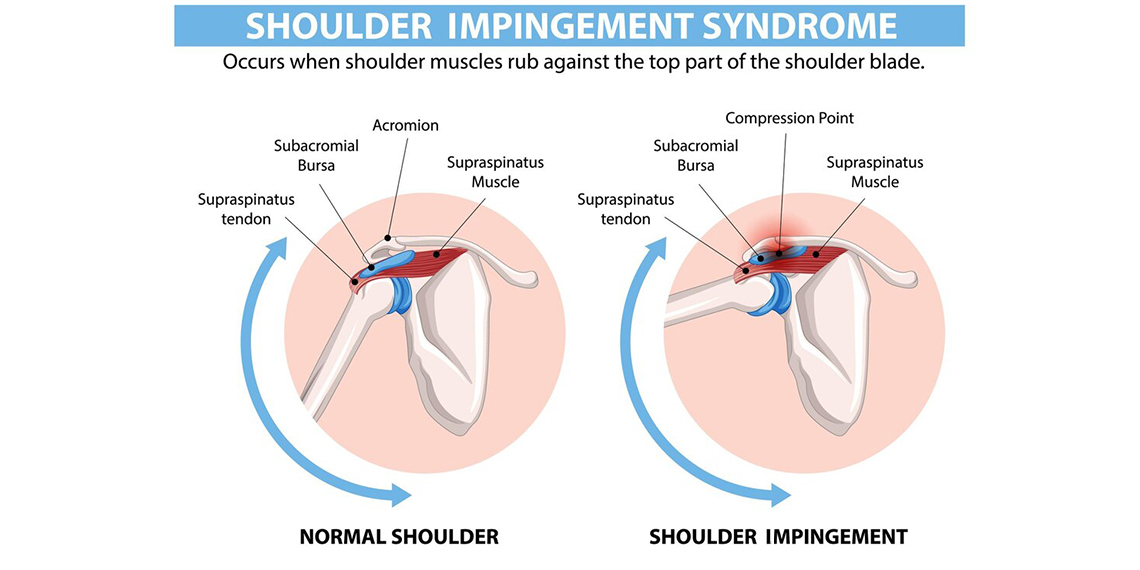
Shoulder impingement syndrome is a common issue that causes pain and restricted movement due to compression in the shoulder joint. This condition occurs when the supraspinatus tendon, subacromial bursa, and other tissues near the shoulder joint become compressed under the acromion. It typically develops due to repetitive overhead movements, poor posture, or muscle imbalances.
Manual therapy and atlas therapy play a crucial role in managing impingement syndrome. In this article, we will explore the causes and symptoms of impingement syndrome and discuss how atlas therapy and manual therapy can help.
Causes and Symptoms of Impingement Syndrome
Impingement syndrome occurs when certain structures in the shoulder joint become compressed during movement. The most common causes include:
- Shoulder Mechanics Dysfunction: Lack of scapular stability, poor posture, and muscle imbalances increase the risk of impingement.
- Weakness of the Rotator Cuff: Weakness in the supraspinatus and other rotator cuff muscles can lead to instability in the shoulder joint, causing impingement.
- Kyphotic Posture and Neck Issues: Postural problems in the neck region and misalignment of the atlas vertebra can affect scapular mobility and optimal shoulder function.
- Repetitive Movements: Overhead sports (such as swimming, tennis, and volleyball) or professions requiring repetitive movements are at higher risk.
Common symptoms of impingement syndrome include:
- Pain during specific shoulder movements (especially overhead movements)
- Loss of strength and restricted movement in the shoulder
- Shoulder pain worsening at night
- Clicking or pinching sensation in the shoulder
The Role of Atlas Therapy and Manual Therapy
Traditional approaches to treating impingement syndrome include exercise, anti-inflammatory medications, and physical therapy. However, techniques such as atlas therapy and manual therapy can address underlying biomechanical dysfunctions, providing long-term solutions.
1. The Effects of Atlas Therapy
Atlas therapy focuses on correcting the alignment of the atlas, the first cervical vertebra. Misalignment of the atlas can affect head and neck posture, disrupting shoulder mechanics. Reduced scapular stability and muscle imbalances can trigger impingement syndrome.
With atlas therapy:
✔️ Posture can be improved, enhancing scapular control.
✔️ Tension in the neck region can be reduced, decreasing stress on the shoulder joint.
✔️ Positive effects on the central nervous system can support better muscle activation.
2. Manual Therapy Techniques
Manual therapy includes techniques that address movement restrictions and muscle imbalances in the shoulder joint. Specifically:
✔️ Mobilization Techniques: Increase the range of motion in the shoulder joint, reducing impingement.
✔️ Soft Tissue Manipulation: Techniques targeting the rotator cuff muscles help relieve muscle tension, allowing for greater movement freedom in the shoulder joint.
✔️ Scapular Stabilization Exercises: Retracting and depressing the scapula helps improve shoulder mechanics.
Conclusion
Impingement syndrome is a painful condition caused by compression in the shoulder and is associated with various factors that affect shoulder mechanics. Approaches such as atlas therapy and manual therapy can be effective in managing impingement syndrome by addressing underlying postural and biomechanical issues. Correcting atlas alignment and balancing the surrounding shoulder muscles can help reduce symptoms and prevent recurrence in the long term.