A functional evaluation from the top of the head to the ankle
INTRODUCTION
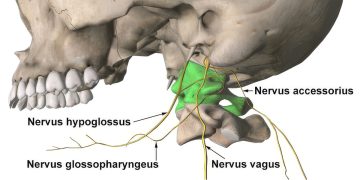
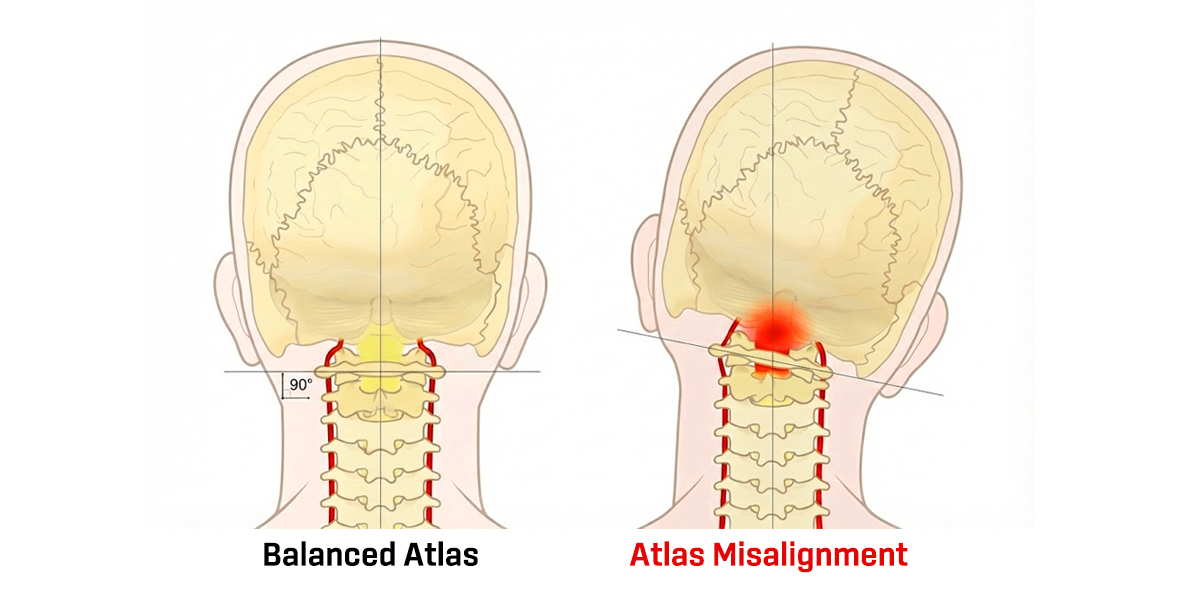
The atlas (C1) is the first vertebra of the spine and serves as the transitional segment between the skull and the spinal column. Due to this anatomical position, it is not merely a mechanical support structure but also a critical center for neurological, vascular, and autonomic regulation.
The upper cervical region lies in close proximity to the brainstem, vertebral arteries, sympathetic chain, trigeminocervical complex, and vestibular nuclei. Therefore, malalignment, tone alteration, or restriction in the atlas region may create not only localized neck pain but also systemic effects through a much broader functional chain.
In this section, the potential areas of influence of Atlas Therapy are discussed in anatomical order, from the top of the head down to the ankle.
1. CRANIUM (VERTEX AND OCCIPITAL REGION)
1.1 Head Pressure and Tension Sensation
The suboccipital muscle group, located between the occiput and the atlas, contains dense proprioceptive receptors. Chronic hypertonicity in these muscles may be associated with dural tension and relatively reduced venous return.
1.2 Migraine and Tension-Type Headaches
The trigeminocervical complex integrates upper cervical afferents with trigeminal nuclei. Dysfunction in the C1–C2 segments may modulate headache mechanisms.
1.3 Reduced Concentration
Cervical proprioceptive input may influence attention and alertness levels via the reticular activating system.
2. EYES AND VISUAL SYSTEM
2.1 Blurred Vision
Changes in brainstem regulation may affect oculomotor coordination.
2.2 Light Sensitivity
Increased trigeminal sensitization associated with migraine mechanisms may occur.
2.3 Reading Fatigue
Cervical postural dysfunction may increase visual fatigue during prolonged near focus.
3. EAR AND VESTIBULAR SYSTEM
3.1 Tinnitus
When somatosensory–vestibular integration is disrupted, the perception of ringing may increase.
3.2 Hearing Reduction
Particularly in sensorineural components, circulatory and neurological regulation may play a supportive role.
3.3 Vertigo and Balance Disorders
The connection between upper cervical proprioception and vestibular nuclei plays an important role in dizziness mechanisms.
4. FACE – JAW – SINUS AREA
4.1 Temporomandibular Joint (TMJ) Disorders
Reflex connections exist between C1–C2 and the trigeminal system.
4.2 Bruxism
Stress-related increases in cervical tone may be reflected in the jaw muscles.
4.3 Facial Pressure and Sinus Fullness
Changes in sympathetic regulation may affect mucosal circulation.
5. THROAT – SWALLOWING – VOICE
5.1 Globus Sensation (Lump in the Throat)
The vagus nerve and pharyngeal muscle coordination are connected with upper cervical regulation.
5.2 Hoarseness
Cervical postural changes may influence laryngeal positioning.
6. AUTONOMIC SYSTEM AND CARDIOVASCULAR EFFECTS
6.1 Pulse Fluctuations
Baroreceptor reflexes and sympathetic tone may be influenced.
6.2 Blood Pressure Variability
The contribution of upper cervical segments to autonomic regulation is discussed in the literature.
6.3 Cold Hands and Feet
Peripheral vasoconstriction is associated with sympathetic dominance.
7. SHOULDER – SCAPULA – ARM
7.1 Shoulder Depression
Atlas alignment may influence scapular balance.
7.2 Arm Numbness
Cervical segments may alter mechanical tension on the brachial plexus.
7.3 Scapular Asymmetry
One of the early findings in the postural compensation chain.
8. THORACIC REGION AND RESPIRATION
8.1 Shallow Breathing
Forward head posture may increase thoracic kyphosis.
8.2 Diaphragmatic Restriction
Upper cervical tone may indirectly affect diaphragm function.
9. DIGESTIVE SYSTEM
9.1 Reflux Sensation
Changes in vagal tone may influence esophageal sphincter regulation.
9.2 Bloating and IBS-Like Symptoms
Autonomic imbalance may alter gastrointestinal motility.
10. PELVIS AND HIP
10.1 Functional Leg Length Discrepancy
Atlas-related postural chains may create compensatory changes in the pelvis.
10.2 Pelvic Rotation
Long-standing cervical asymmetry may affect pelvic alignment.
10.3 Hip Pain
Altered load distribution may be reflected in the hip joint.
11. KNEE
11.1 Unilateral Loading
Pelvic asymmetry may transfer stress to the knee joint.
11.2 Patellofemoral Pain
Lower extremity biomechanics may be influenced by cervical alignment.
12. ANKLE AND FOOT
12.1 Increased Pronation
Changes in the proprioceptive chain may influence the foot arch.
12.2 Balance Problems
Cervical proprioceptive dysfunction may alter distal balance strategies.
CONCLUSION
The atlas is not merely a vertebra; it is a central transition point between cranial structures and the entire postural chain.
Upper cervical alignment may create a broad area of influence from head to toe through:
-
Neurological regulation
-
Autonomic balance
-
Vestibular integration
-
Postural compensation chains
The Atlas Therapy approach aims to evaluate not only local symptoms but the holistic organization extending from cranial to distal regions.