Migraine and Headache
Headaches are among the most common complaints of modern life. According to data from the World Health Organization, billions of people worldwide are affected each year by various types of headache. While tension-type headaches are the most frequently encountered, the one that most significantly reduces quality of life is migraine.
Migraine is typically a unilateral, throbbing headache that worsens with physical activity and is often accompanied by sensitivity to light and sound. In some individuals, it also presents with additional symptoms such as nausea, vomiting, and visual disturbances. The causes of migraine are complex; genetic predisposition, hormonal changes, environmental factors, and neurovascular mechanisms all play a role.
Tension-type headaches, on the other hand, are felt primarily in the neck, forehead, and temples, and are characterized by a pressing pain linked to muscle tension. Dysfunctions in the muscles of the neck and shoulders are among the most common triggers for this type of pain.
The Atlas (C1) Vertebra: The Foundation of the Spine
The atlas vertebra is the topmost segment of the cervical spine and is the first vertebra that supports the skull. It is also referred to as “C1.”
Named after the mythological figure Atlas—who bore the world upon his shoulders in Greek mythology—this structure differs anatomically from other vertebrae: it has no body, is ring-shaped, and forms a specialized joint with the second cervical vertebra, the axis (C2).
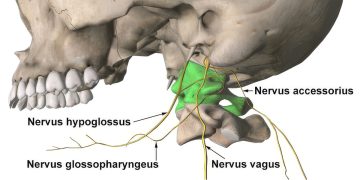
Functionally, the atlas serves as a bridge between the head and the rest of the spine. Important neural pathways and the vertebral arteries emerge from the brain and pass through this region. Therefore, misalignments of the atlas can have not only mechanical but also neurological and circulatory consequences.
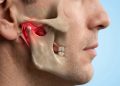
Proper alignment of the atlas is crucial for healthy functioning of the central nervous system and for maintaining postural balance. Structural abnormalities of the atlas can lay the groundwork not only for neck pain but also for headaches, balance disturbances, jaw pain, and even certain digestive issues.
Evaluation of the Relationship Between Migraine, Headache, and the Atlas Vertebra
Headache—and in particular migraine—are among the neurological problems that affect a large portion of the population today and severely diminish quality of life.
Although migraine is often associated with hormonal, genetic, or environmental factors, recent studies have drawn attention to its connection with the cervical vertebrae, especially the atlas (C1) vertebra.
As the first cervical vertebra supporting the skull, the atlas forms the most critical structural link between the head and the spine. Even a slight displacement in this region can affect the position of the head, the alignment of the spinal cord, and the surrounding neurovascular structures. Because of its anatomical proximity to both the spinal cord and brainstem, any dysfunction at the C1 level can have indirect effects on the central nervous system.
While the role of the trigeminovascular system in migraine pathophysiology is well established, neurological signals originating from the neck region can interact with the trigeminal nerve and trigger a migraine attack. In particular, malposition of the atlas can irritate the surrounding muscles, ligaments, and nerve tissues, initiating or intensifying the pain cycle. This phenomenon is significant not only in migraine but also in tension-type headaches.
Clinical observations indicate that manual adjustments to atlas alignment—when performed using proper techniques—can reduce both the frequency and severity of migraines. Moreover, ensuring the structural balance of the atlas not only alleviates symptoms but also positively influences a person’s overall posture and neurovegetative functions.
Neck-related headaches are often overlooked and are usually explained solely by neurological causes. However, when evaluated from a functional perspective, it becomes clear that disruption of the craniovertebral relationship can give rise to a variety of symptoms—such as vertigo, nausea, balance problems, and even sleep disturbances—in addition to headaches.
In conclusion, the condition of the atlas vertebra should not be ignored when assessing migraine and headache complaints. With a multidisciplinary approach—incorporating manual therapy, exercise, and postural corrections—interventions aimed at atlas alignment emerge as a complementary and effective option for migraine management. Future high-level studies in this field will more clearly reveal the relationship between the cervical vertebrae and headaches.
Approaches that target only the symptoms often prove insufficient in the fight against migraine and headaches. Particularly in the case of recurrent and treatment-resistant headaches, functional evaluation of the cervical vertebrae gains importance.
Because of its anatomical position and neural connections, the atlas vertebra plays a key role in this evaluation. Healthy alignment of the atlas is important not only for pain management but also for preserving an individual’s overall postural and neurovegetative balance.
In addition to conventional approaches for headache complaints, holistic evaluations and interventions developed with the contributions of manual therapists, physiotherapists, and other healthcare professionals specializing in this field can yield outcomes that significantly improve patients’ quality of life.