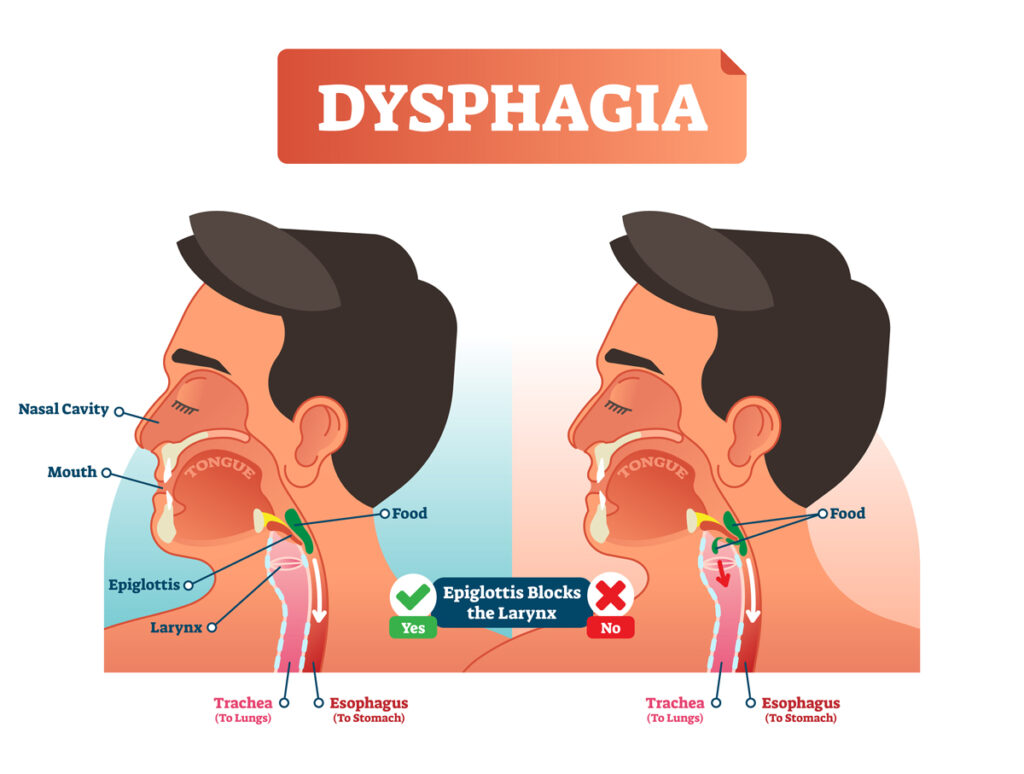
Swallowing difficulty (dysphagia) refers to trouble moving food from the mouth to the stomach. This condition can significantly impact quality of life and lead to various health complications. While dysphagia has many causes, cervicogenic dysphagia—stemming from neck issues—plays a crucial role.
The Connection Between the Neck and Swallowing Mechanism
Swallowing is a complex process requiring coordinated function between the nervous system and muscles. The cervical spine, particularly the atlas (C1) vertebra, is a critical area where swallowing-related nerves pass through and muscles attach. Pain, postural misalignment, trauma, or degenerative changes in the neck can negatively affect the swallowing process, impairing both sensory and motor functions.
- Sensory Impact: Pain originating from the neck can interfere with the perception of food in the mouth, making it difficult to determine when to swallow. This can lead to issues such as coughing or choking during swallowing.
- Motor Impact: Neck dysfunctions can disrupt the function of muscles involved in swallowing, including those controlling the tongue, jaw, and hyo-laryngeal (hyoid bone) movements. This can result in food residue remaining in the mouth or throat after swallowing. Additionally, neck problems may reduce the normal elevation of the larynx during swallowing, increasing the risk of aspiration (food particles entering the lungs).
Symptoms of Cervicogenic Dysphagia
Symptoms vary depending on the underlying neck issue and its effect on the swallowing mechanism. Common symptoms include:
- Difficulty swallowing (dysphagia)
- Sensation of food sticking in the throat
- Pain during swallowing
- Hoarseness
- Neck pain and restricted movement
- Headaches and dizziness
The Role of Atlas Therapy
Atlas therapy is a treatment method focused on correcting misalignments in the cervical spine, particularly the atlas vertebra. Misalignment in the atlas can put pressure on the nervous system, negatively affecting the swallowing process. By restoring proper alignment, atlas therapy may help alleviate this pressure and improve the biomechanical balance of the neck, promoting better swallowing function.
Atlas therapy not only targets the atlas vertebra but also assesses the alignment of the entire cervical spine and surrounding tissues. By addressing overall dysfunction in the neck region, this therapy provides a more comprehensive approach to relieving swallowing difficulties.