Could your jaw pain actually stem from tension in your lower back? Let’s explore the secrets of the body’s “invisible web” and the holistic approach of Atlas Therapy.
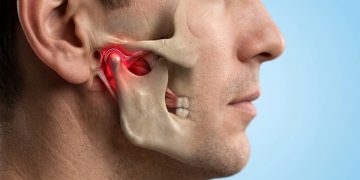
Jaw pain, clicking sounds, or discomfort while chewing are often viewed solely as issues originating from the temporomandibular joint (TMJ). However, contemporary studies show that this picture isn’t limited to the structure of the joint alone; the fascial system, which holds muscles and joints together, plays a key role in this process.
So, how does this fascial web surrounding our body affect our jaw health? Here is the step-by-step relationship between fascia and the jaw…
The Power of the Invisible Web: The Fascia-Jaw Connection
Fascia is a 3D connective tissue network that surrounds the body, linking muscles, bones, and organs. It is not merely a static tissue; it provides postural awareness (proprioception) throughout the body and balances our movements through passive force transmission. Especially in the jaw and neck region, myofascial force transmission is of critical importance.
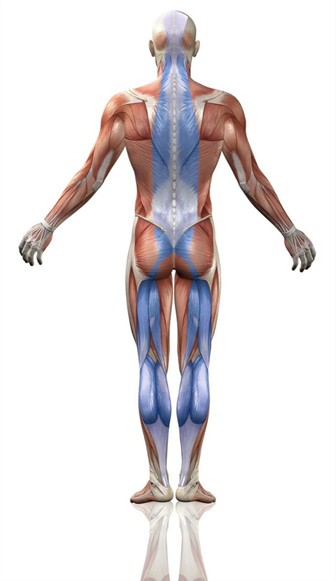
Fascial chains (superficial front, back, and spiral lines) establish direct connections between the TMJ and the lower back regions. For example, while the temporalis and masseter muscles connect to the neck muscles, the thoracolumbar fascia extends from the neck to the lower back, ensuring postural alignment. These structures form a functional complex called the “cranio-cervico-mandibular system” by establishing ligamentous and muscular connections to the cervical region. Any disruption in this system manifests as temporomandibular disorders (TMD).
From Part to Whole: Why Must We Look Holistically?
If there is a shift in a building’s foundation, you cannot fix the cracks on the top floor just by painting over them; the problem is structural, not visual. Our bodies work exactly the same way. The jaw joint (TMJ) is actually one of the most sensitive “final stops” of that massive fascial web enveloping our body.
If there is tension in the lower rings of this chain, for instance, in the thoracolumbar (lower back) region or the trapezius line, this restriction creates a “pulling force” along the entire track. This tension, climbing upward through the fascial web, eventually puts pressure on the jaw joint. At this point, focusing only on the jaw is no different from painting over the crack in the building. For a real solution, that pulling force must be stopped at its source.
The Atlas Therapy Approach: Untying the Knot at the Source
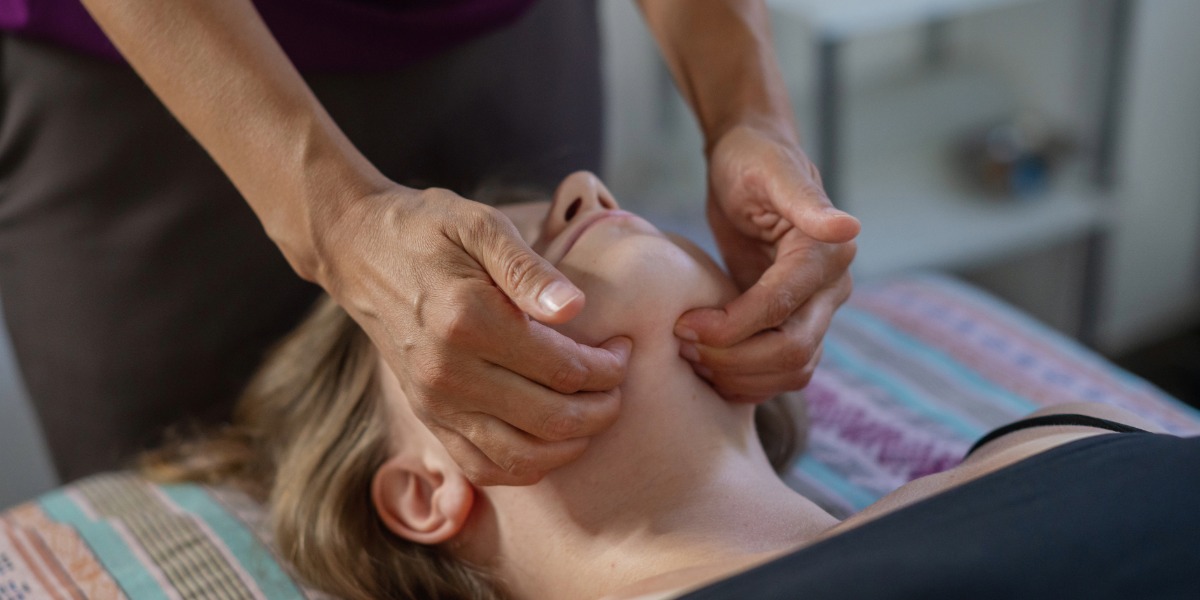
In our clinical practice, before directly intervening in the jaw joint, we prioritize releasing the surrounding tissues that restrict that joint—namely the back, shoulder, and neck lines.
When these fascial knots in the “invisible web” are resolved, the mechanical pressure on the jaw joint is lifted, and the joint naturally regains its range of motion. In Atlas Therapy method, we aim for postural-based, lasting comfort spread across the entire system, rather than just temporary relief.
System Balance, Quality of Life
Jaw pain, clicking sounds, or joint restriction are not simply “joint problems”; they are imbalances of the cranio-cervico-mandibular system. Our goal is to improve your quality of life by re-establishing this delicate balance through a holistic perspective.
Because we know that for a relaxed jaw, sometimes the whole body needs to breathe.
Written by:
Bahar Koçtekin
Physiotherapy Technician
References
-
Adibi, N., et al. (2012). Fascia: A morphological description and classification system based on a literature review. PubMed – PMC3430451.
-
Cuccia, A., & Caradonna, C. (2009). The relationship between the stomatognathic system and body posture. PubMed.
-
Kalamir, A., et al. Effectiveness of myofascial release techniques in the treatment of TMJ disorders.