One of the most frequent scenarios we encounter in the clinic involves patients who come to us with a diagnosis of cervical disc herniation, yet have struggled to find any real relief despite the various treatments they have previously tried. At this exact point, a frequently overlooked cause comes into play: Thoracic Outlet Syndrome.
What is the Thoracic Outlet and Why is it So Important?
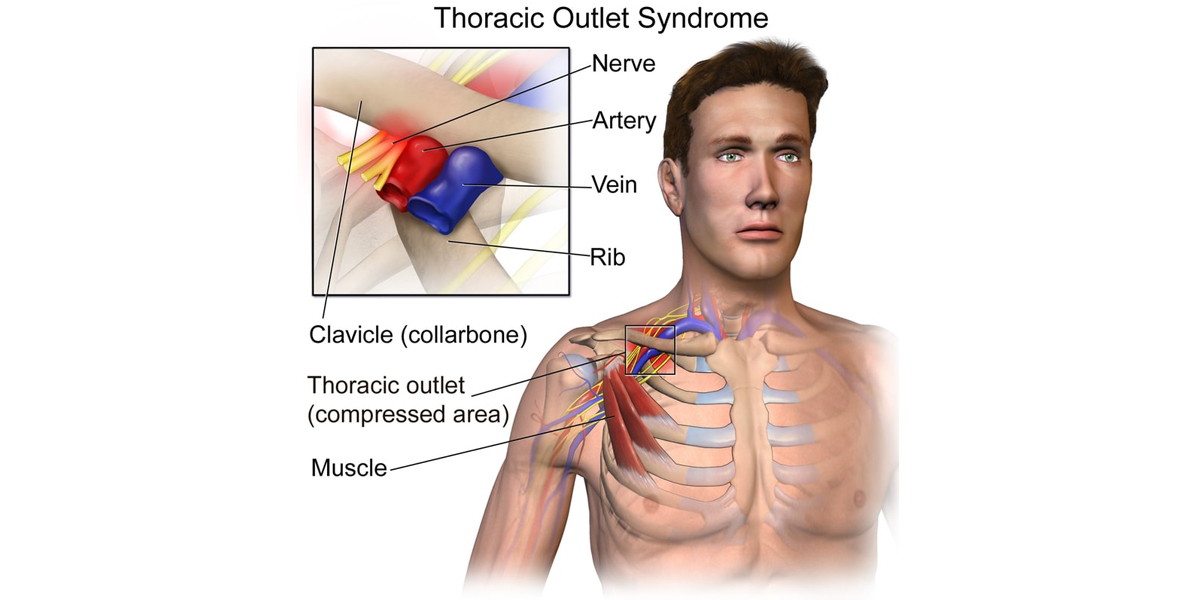
The thoracic outlet is the narrow corridor leading from just below our neck toward the armpit. The body’s command center nerve bundles (brachial plexus) and blood vessels pass through it. Think of this area as a small tunnel; the ceiling of the tunnel is the collarbone, and the floor is the first rib.
Why is it So Often Mistaken for a “Hernia”?
Because the symptoms are remarkably similar: numbness in the arm, loss of strength, and sometimes tingling that extends all the way to the fingertips. However, the primary trigger for TOS is the infamous “slouched posture” we adopt while using smartphones or keyboards throughout the day. When the shoulders collapse forward, that narrow tunnel constricts further, and the nerves become literally trapped there.
Scientific Evidence: Journal of Manual & Manipulative Therapy Study
Rather than simply suggesting “exercise and it will pass,” acting in the light of scientific data yields much faster results. In a comprehensive study published in the Journal of Manual & Manipulative Therapy (Crosbie et al.), the mechanics of narrowing in the thoracic outlet region were examined, and the success of conservative treatment was analyzed.
According to this study, it was determined that for a large portion of patients, the primary source of complaints was not just nerve compression, but the upward displacement of the first rib. Researchers showed that patients who underwent rib mobilization with specific manual therapy techniques recorded a much faster improvement in functional capacity (an average of 35% more range of motion) compared to those who only performed standard stretching exercises.
Important Findings Based on Our Clinical Experience
When we blend the data from this study with our own clinical practice, the following points stand out:
-
Serratus Anterior Strength: When this muscle is weak, the shoulder blade cannot stay in its proper position, and nerve pressure increases.
-
Night Pains: The complaint of “I wake up with my hand numb,” which we often hear from our patients, is usually a result of vascular pressure in this region.
-
The First Rib Factor: Most of the time, when we focus on the “first rib” mobilization mentioned in the study rather than just soft tissue, we witness that moment where the patient says, “I feel like a weight has been lifted off my shoulders.”
Conclusion
If the paths you take to treat the numbness in your arm always lead to the same dead end, perhaps the area that needs attention is slightly below your neck. With a precise manual therapy touch and postural awareness, it is possible to relieve these narrow passages of your body.
Written by:
Yunus Emre SARIOĞLU
Physiotherapist
References
- Crosbie, J., & Kilbreath, S. L. (1997). The relationship between cervical posture and the first rib in patients with thoracic outlet syndrome. Journal of Manual & Manipulative Therapy.
- Vanti, C., et al. (2014). Conservative treatment of thoracic outlet syndrome. A review of the literature. Europa Medicophysica.
- Watson, L. A., et al. (2010). Thoracic outlet syndrome, part 2: Conservative management and clinical outcome. Manual Therapy.