Neck and jaw pain are often related to the musculoskeletal system, but the digastric muscle is frequently overlooked. Named for its “two-bellied” structure, this small yet important muscle works quietly during essential functions such as speaking, chewing, and swallowing. However, once it becomes tight, develops trigger points, or is overloaded, the pain can radiate to the neck, jaw, and even the ear.
What Is the Digastric Muscle?
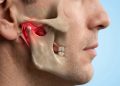
The digastric muscle, as its name suggests, consists of two separate bellies:
- The anterior belly extends between the mandible (lower jaw) and the intermediate tendon.
- The posterior belly originates from the mastoid notch of the temporal bone.
These two bellies are connected by an intermediate tendon that typically passes over the hyoid. The muscle functions to depress the mandible to open the mouth and to elevate the hyoid, assisting during swallowing.
What Could Be the Source of Pain?
Pain in the digastric muscle is often associated with myofascial trigger points. These are small taut bands within the muscle fibers that can cause referred pain to nearby regions. For example:
- A trigger point in the anterior belly may refer pain to the submandibular area, the front of the neck, and the lower teeth.
- A trigger point in the posterior belly often refers pain around the ear, to the back of the head, and to the temporomandibular joint (TMJ).
Thus, digastric muscle pain is frequently mistaken for toothache, TMJ disorders, or ear pain.
Factors That Trigger Pain
Many factors can contribute to pain in this muscle:
- Teeth clenching or grinding (bruxism): Constant contraction of the jaw muscles places a chronic load on the digastric muscle.
- Prolonged poor posture: Forward head posture during computer or phone use keeps the digastric and neck muscles under continuous tension.
- Stress: Increased muscle tone with stress can cause involuntary contractions in the jaw muscles.
- Trauma or surgical procedures: Operations in the neck region, intubation, or sudden jaw movements can disrupt the muscle’s structure.
- Cold exposure or muscle guarding: Sudden exposure to cold increases the risk of spasm.
Symptoms
Digastric muscle pain is not limited to neck or jaw pain. The following symptoms are common:
- Pain while swallowing or speaking
- Limitation of mouth opening
- Tenderness at the angle of the mandible
- A feeling of ear fullness or referred pain perceived as earache
- A sense of tightness at the lower part of the head
Diagnosis and Differential Diagnosis
Diagnosis is typically made through manual examination. An experienced physiotherapist or physician evaluates the referral pattern of pain during palpation of the muscle. However, other possibilities should also be ruled out:
- Temporomandibular joint (TMJ) dysfunction
- Dental (tooth) pain
- Otitis media (middle ear infection)
- Cervical disc herniation or nerve entrapments
If necessary, ultrasound or magnetic resonance imaging (MRI) can be used to examine the muscle and surrounding tissues.
Treatment Approaches
Treatment generally begins with conservative (non-surgical) methods:
- Manual therapy and trigger point massage: Aiming to relax the muscle and improve circulation.
- Stretching exercises: Performed especially together with the hyoid muscle group and the sternocleidomastoid.
- Heat applications: Superficial heat may reduce spasm.
- Posture correction and stress management: The key to long-term improvement.
The digastric muscle is one of the “silent culprits” in complex neck and jaw pain presentations. It is often overlooked because its pain can feel as though it originates from the teeth, ear, or the joint itself. With accurate assessment and appropriate treatment, these pains can be significantly reduced.